Stinging insect and paper wasp extraction targets colonization behaviors specific to the humid river basin ecology of Middle Tennessee. Species like Polistes metricus and Polistes carolinus establish umbrella-shaped…
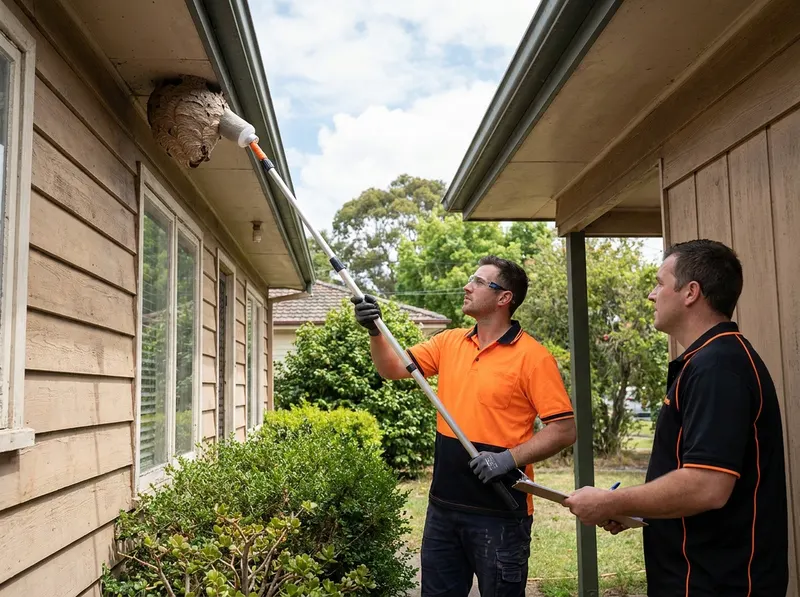
Stinging insect and paper wasp extraction targets colonization behaviors specific to the humid river basin ecology of Middle Tennessee. Species like Polistes metricus and Polistes carolinus establish umbrella-shaped open-comb nests under eaves, dormers, porch ceilings, and architectural brackets. Homeowners in neighborhoods with older wood trim and open rafters, such as historic craftsman bungalows in East Nashville, 12 South, and Belmont-Hillsboro, frequently encounter rapid nest expansion between May and September. According to the University of Tennessee Extension, warm springs accelerate queen emergence, driving wasps to construct combs beneath decking and within soffit joints. Pest Control Service utilizes targeted pyrethroid freeze compounds alongside mechanical physical removals, eliminating the colony without drenching building surfaces in airborne residues. This approach avoids toxic interior drift, preserving indoor air safety for households with children and domestic animals in accordance with EPA pesticide safety standards.
Cavity-dwelling wasps and aggressive hornets present distinct structural hazards compared to surface-dwelling paper wasps. In areas like Sylvan Park, Germantown, and The Nations, renovations often leave unsealed junction boxes, decorative brick weepholes, and uncaulked fascia boards. When paper wasps or yellowjackets push behind exterior cladding into interior wall cavities, standard store-bought aerosol sprays merely deflect workers deeper into living spaces, sometimes causing insects to chew through 1/2-inch drywall. As outlined by the Entomological Society of America, void-nesting hymenopterans require pressurized micro-granule formulations applied directly into structural channels, followed by systematic void evacuation. Technician inspections identify entry points around rafter tails, ridge vents, and chimney flashings, following the construction standards set by the International Association of Certified Home Inspectors to ensure remediation preserves the building envelope.
Decision guidance dictates extraction protocols based on height, nesting site, and proximity to active outdoor living areas. If an active paper wasp nest is located under a ground-floor deck or porch rail in Donelson or Green Hills, single-stage mechanical detachment paired with residual repellent barriers provides complete resolution. If the nest occupies second-story eaves exceeding 20 feet or penetrates soffit voids near attic insulation, multi-stage pressure injection and exterior physical sealing are required. Chemical formulations must align with state environmental directives governed by the Tennessee Department of Agriculture, restricting broad-spectrum perimeter contamination. Structural exclusion prevents seasonal re-infestation: weep screens, hardware cloth (1/8-inch mesh) over attic louvers, and elastomeric silicone caulking along fascia gaps lock out fertilizing queens seeking winter harborage before October frost.
Every job gets a firm, written price after a free on-site visit.
Tell us about your stinging insect and paper wasp extraction job in Nashville and we'll send a clear, written quote, usually the same day.
 Pest Control Service