Ant colony elimination and perimeter defense serves properties experiencing chronic structural foraging from carpenter ants, odorous house ants, or subterranean satellite colonies. Standard consumer aerosol sprays…
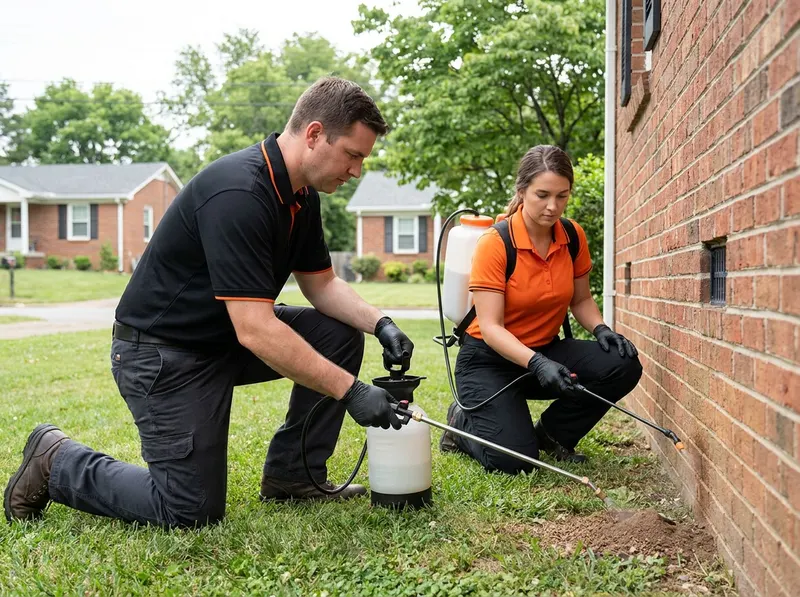
Ant colony elimination and perimeter defense serves properties experiencing chronic structural foraging from carpenter ants, odorous house ants, or subterranean satellite colonies. Standard consumer aerosol sprays scatter worker ants into secondary nesting pockets through budding, escalating structural damage within crawlspaces and wall voids. Professional barrier defense deploys undetectable transfer agents documented by the U.S. Environmental Protection Agency, allowing foraging workers to carry slow-acting active ingredients back to the queen. This strategy prioritizes colony-level mortality over topical knockdowns, creating lasting perimeter resistance for homes near heavily wooded canopies in Green Hills, Belmont-Hillsboro, and Sylvan Park.
Structural geography throughout Davidson County directly dictates treatment intensity. Historic crawlspace foundations along East Nashville and Inglewood often harbor moisture-compromised sill plates that attract carpenter ant galleries, which require localized moisture mitigation alongside targeted void dusting under standards outlined by the Tennessee Department of Agriculture Regulatory Services. In contrast, slab-on-grade builds in The Nations, Germantown, and 12 South frequently develop subterranean foraging tracks through expansion joints and utility pipe collars. Perimeter defense applies a continuous non-repellent chemical barrier along the soil perimeter in alignment with structural guidelines from the National Pest Management Association, intercepting outdoor colonies nesting beneath limestone shelves before interior transit begins.
Effective ant eradication relies on definitive protocol stages. First, technicians inspect exterior thresholds, weeping holes, and tree branches touching rooflines. Second, target species identification determines nutritional preference, alternating between carbohydrate or protein bait formulations approved by the University of Tennessee Extension. Third, liquid non-repellent perimeter applications establish a treated structural perimeter, calibrated in accordance with the Occupational Safety and Health Administration safety protocols for technician application. Fourth, interior applications focus strictly on hidden wall voids, pipe chases, and electrical junction boxes rather than broadcast surface spraying. This method isolates chemical placement away from pets and children, respecting environmental standards tracked by the U.S. Fish and Wildlife Service and watershed protection initiatives by the Metro Water Services near the Cumberland River and Radnor Lake State Park.
The decisive advantage of perimeter defense lies in root-cause eradication versus temporary repellant deterrence. While fast-acting contact pyrethroids turn ants away from treated door jambs only to drive them through electrical conduits or subfloors, perimeter transfer chemistries use the grooming habits of social insects to systematically collapse the central reproductive unit. For properties near damp greenways like Shelby Bottoms or urban soil interfaces in Donelson, seasonal perimeter re-treatments maintain an exterior envelope that neutralizes satellite colonies before structural infiltration occurs.
Every job gets a firm, written price after a free on-site visit.
Tell us about your ant colony elimination and perimeter defense job in Nashville and we'll send a clear, written quote, usually the same day.
 Pest Control Service