Commercial kitchen operations across historic brick structures in Germantown, busy dining strips in East Nashville, and high-volume kitchens along 12 South face continuous exposure to pest incursions fueled by…
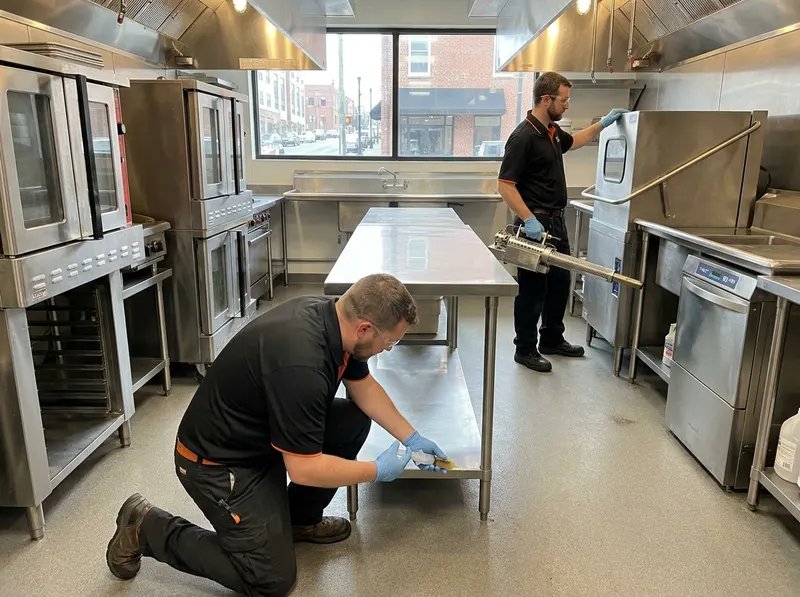
Commercial kitchen operations across historic brick structures in Germantown, busy dining strips in East Nashville, and high-volume kitchens along 12 South face continuous exposure to pest incursions fueled by continuous heat, organic waste lines, and food prep moisture. Biological invasions compromise food prep surfaces, violate sanitation regulations, and trigger closures under municipal inspection criteria. Addressing these infestations requires targeted mechanical exclusion and biological breakdown of organic layers, moving far beyond superficial chemical sprays that contaminate prep tables or scatter nesting insect populations deeper into hollow stainless-steel legs and wall cavities.
Drain lines represent the primary entry and breeding vector in food facilities. Decaying fats, oils, and grease (FOG) accumulate inside floor sinks, soda machine overflow lines, and trench drains, creating anaerobic feeding grounds for phorid flies and drain flies. Applying thick enzymatic foams directly breaks down this bio-gel matrix down to the bare pipe, depriving larvae of survival resources. Technicians apply targeted structural sealants around pipe penetrations through concrete slab foundations, eliminating unmonitored pathways utilized by Norway rats entering via utility conduits from subterranean sewer lines. Mechanical exclusion utilizes stainless steel mesh, copper wool, and vulcanized silicone sealants to lock out rodents without introducing airborne toxins near open preparation zones.
German cockroach elimination relies on technical bait placement and insect growth regulators (IGRs) set inside non-food contact voids, motor housings, and electrical conduits. Facilities in The Nations, Sylvan Park, and Donelson frequently battle roach aggregations behind high-temperature dishwashers where moisture builds continuously. Technicians inject targeted abamectin or indoxacarb baits inside structural micro-crevices, paired with hydroprene growth regulators that disrupt nymph maturation without generating hazardous aerosol drift. High-capture pheromone sticky monitors map insect trajectories across prep lines, proving continuous population decline across every weekly inspection cycle.
Operational treatments adapt to restaurant prep cycles without disrupting service shifts. Heavy curative cleanouts take place after the kitchen line closes, deploying HEPA-filtered vacuum extraction to remove aggregate egg cases and live harborages behind hot lines. Ongoing maintenance follows strict protocol without locked multi-year service contracts, deploying targeted treatments when the diagnostic data dictates. Service calls are logged directly via (629) 319-7851, dispatching heavy-duty commercial technicians to halt infestations before regular public lunch or dinner shifts begin.
Every job gets a firm, written price after a free on-site visit.
Tell us about your commercial kitchen sanitation and pest defense job in Nashville and we'll send a clear, written quote, usually the same day.
 Pest Control Service