Property owners requiring an emergency pest control service in Nashville face intense local biological pressures, including subterranean termites, brown recluse spiders, and aggressive rodent migrations. Our technicians deploy decisive barrier systems engineered specifically for the karst topography, limestone foundations, and humid river basin dynamics of Davidson County.

Pest Control Service in Nashville is an integrated biological management and structural defense system that eliminates active infestations and seals residential envelopes against Middle Tennessee pests.
Every service reflects the same meticulous attention to detail, whether it's a single job or a larger pest control service project across Nashville.
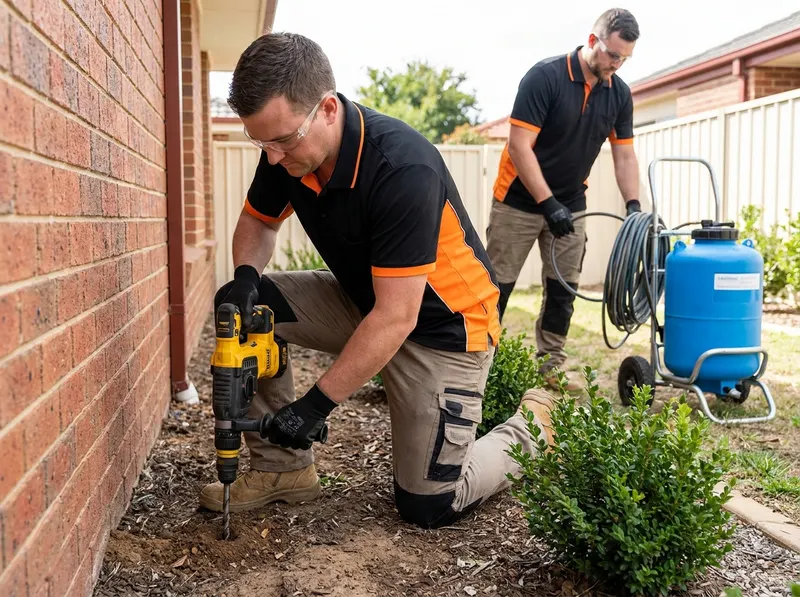
Subterranean termites cause significant structural framing damage throughout Davidson County by establishing colonies in the moist soil beneath foundations. Targeted remediation involves applying an exterior non-repellent liquid barrier along perimeter foundation walls, trenching crawlspace support piers, and drilling concrete pads where structural wood meets grade level. Technicians assess soil moisture content according to guidelines from the Tennessee Department of Agriculture to ensure thorough termiticide binding without runoff into local waterways. Liquid treatments use fipronil formulations applied at a calibrated rate of 4 gallons per 10 linear feet per foot of depth, creating a continuous chemical zone that foraging worker termites transfer throughout the parent colony. In structures built over monolithic or floating concrete slabs, technicians complete precision sub-slab pressure injections by drilling 0.5-inch access holes spaced every 12 inches along structural load-bearing walls. This liquid envelope neutralizes active foragers within 30 to 90 days while establishing continuous subterranean protection that lasts up to a decade without requiring disruptive indoor broadcast sprays.
Get a quote →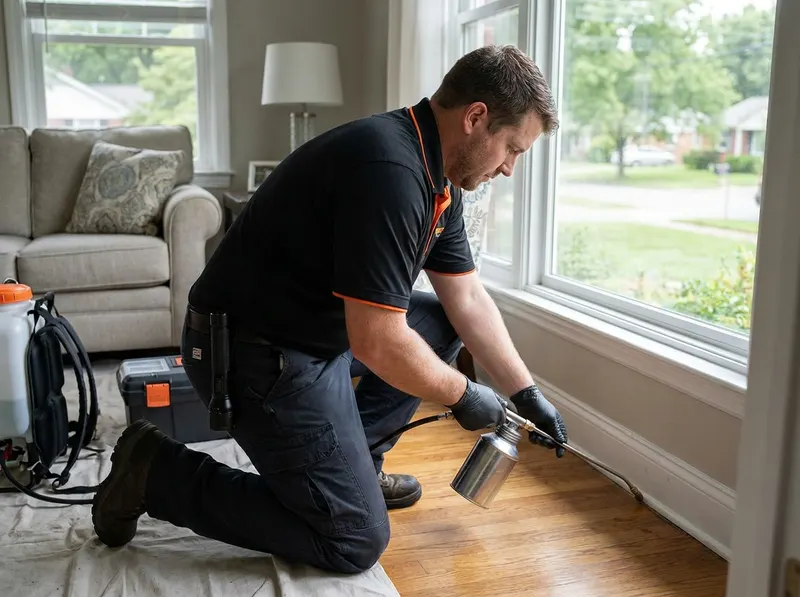
Brown recluse spiders thrive in the dark, climate-buffered zones of Middle Tennessee homes, including subfloor insulation, unsealed attics, and cluttered storage spaces. Eradication demands high-output mechanical dusting inside drywall cavities, electrical chase ways, and wall voids using microencapsulated residuals. In accordance with safety parameters established by the Environmental Protection Agency , targeted indoor formulations minimize airborne drift while leaving durable active films across primary arachnid travel corridors. Technicians access hidden wall voids by removing outlet faceplates and using directional bulb dusters to inject micronized silica and synthetic pyrethroids directly behind drywall partitions. Attics insulated with blown-in cellulose receive targeted microencapsulated barrier mists that coat floor joists and roof decking where nocturnal recluses forage for secondary insect prey. Sticky adhesive monitoring traps are positioned along baseboards, beneath furniture, and inside utility closets at 10-foot intervals to track population depletion curves over an initial 60-day remediation cycle.
Get a quote →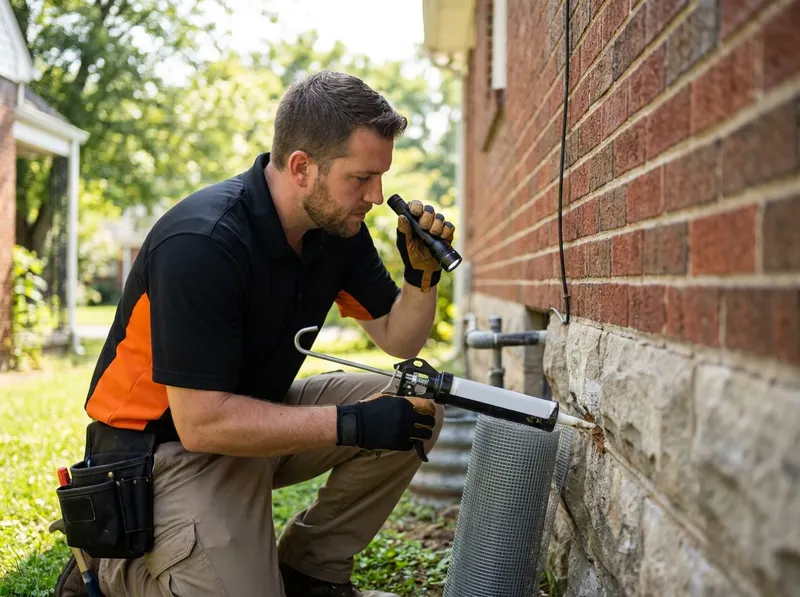
Norway rats, roof rats, and house mice exploit perimeter structural voids to access interior living spaces and gnaw on electrical wiring. Field personnel execute full physical exclusions using 20-gauge galvanized steel mesh, copper mesh, and elastomeric sealants along rooflines, crawlspace vents, and plumbing penetrations. Trapping regimes strictly adhere to the biological containment recommendations documented by the Centers for Disease Control and Prevention , eliminating vectors without introducing toxic hazards to domestic animals. The service begins with an inspection of all potential entry points measuring 0.25 inches or larger, paying strict attention to roof returns, soffit intersections, and foundation sill plates. Technicians mechanically fasten galvanized hardware cloth over crawlspace air louvers and fill foundation voids using steel wire packing topped with hydraulic expansion cement. Indoors, snap traps placed inside tamper-resistant stations along verified structural runways capture resident rodents within 72 hours, avoiding interior carcass odor and secondary parasitic insect infestations.
Get a quote →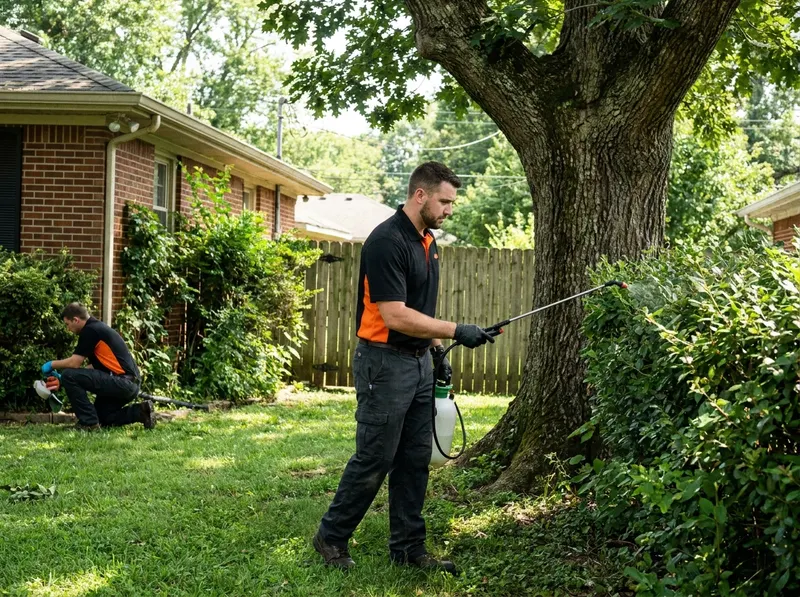
Dense tree canopies and river lowlands generate heavy mosquito and tick harborage zones throughout the humid spring and summer months. Suppression relies on automated backpack mist blowers applying microencapsulated adulticides and bio-rational larvicides directly to the undersides of broadleaf vegetation and property perimeters. Treatments incorporate biological vector research published by the Entomological Society of America to interrupt pupation cycles while preserving non-target predatory beneficial insects. Field crews treat the shaded underside of dense ornamental shrubs, groundcover beds, and wooded perimeter margins where adult female mosquitoes rest during peak daylight heat. Standing water features, gutter downspout extensions, and low-lying drainage depressions receive biological bacillus thuringiensis israelensis dunks to eliminate developing aquatic larvae before emergence. Ground application protocols for blacklegged ticks focus on leaf litter buffers and transition zones between mowed lawns and unmanaged brush, establishing an exterior barrier that reduces parasitic vectors from late March through October.
Get a quote →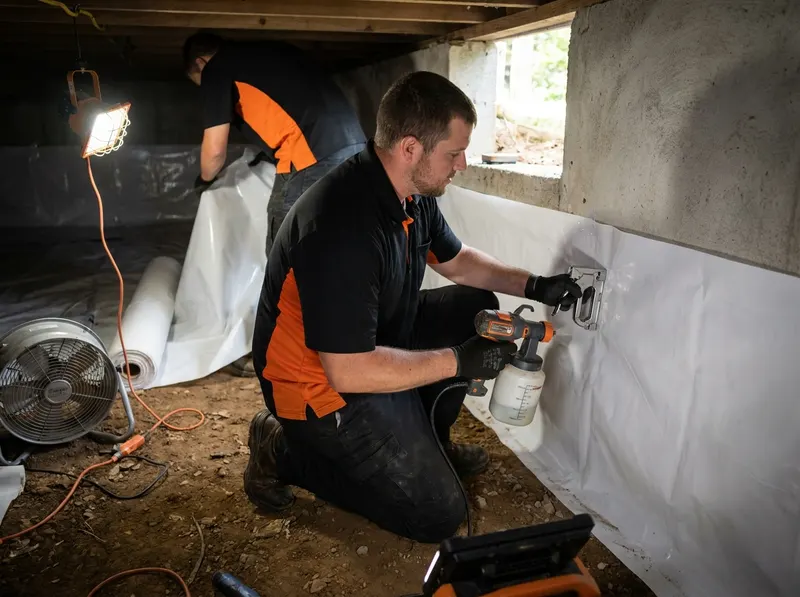
Excessive subfloor relative humidity creates optimal biological breeding conditions for wood-destroying fungi, subterranean termites, and wood-boring beetles. Remediation protocols include laying heavy-duty 10-mil to 20-mil reinforced polyethylene ground barriers, sealing exterior foundation vents, and installing high-capacity commercial crawlspace dehumidifiers. Maintaining structural moisture levels below 15% satisfies the construction defense parameters monitored by the U.S. Department of Housing and Urban Development . Technicians clean crawlspace subfloors of existing organic debris, rake ground soil level, and seal high-durability vapor membranes across 100% of exposed earth, wrapping seams with 4-inch moisture-curing vapor tape and anchoring sheeting 12 inches up foundation walls. Foundation wall vents are sealed with insulated closed-cell structural panels to prevent humid summer ambient air from condensing on cold subfloor ducting. Commercial-grade condensing dehumidifiers sized to crawlspace volume run automatically to hold continuous relative humidity below 55%, preventing fungal decay and structural rot.
Get a quote →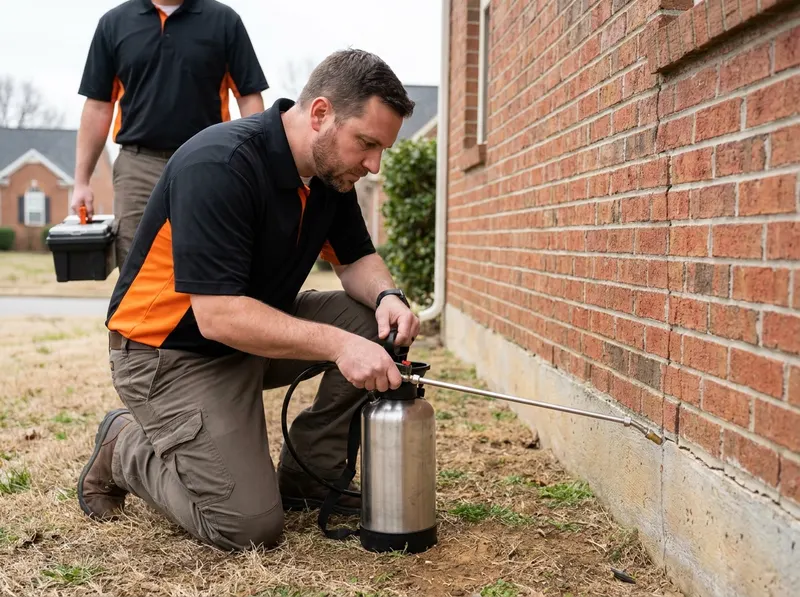
German cockroaches, Oriental roaches, and smoky brown cockroaches enter structures through municipal sewer access points, utility easements, and gaps under exterior entry thresholds. Defense combines precision baiting matrices, insect growth regulators that halt reproduction, and non-staining residual barrier bands along structural footings. Chemical applications follow chemical exposure reduction standards defined by the Occupational Safety and Health Administration to protect inhabited spaces. Inside kitchens and utility rooms, technicians apply pinpoint drops of abamectin or indoxacarb bait matrices deep into cabinet hinges, void brackets, and appliance motor housings where insects aggregate. Insect growth regulators disrupt chitin synthesis, rendering nymphal stages incapable of molting into reproductive adults and collapsing populations within 21 to 30 days. Exterior foundation perimeters receive a 3-foot vertical and 5-foot horizontal residual barrier spray that intercepts perimeter crawling pests before they access brick weep screeds, window sills, or door sweeps.
Get a quote →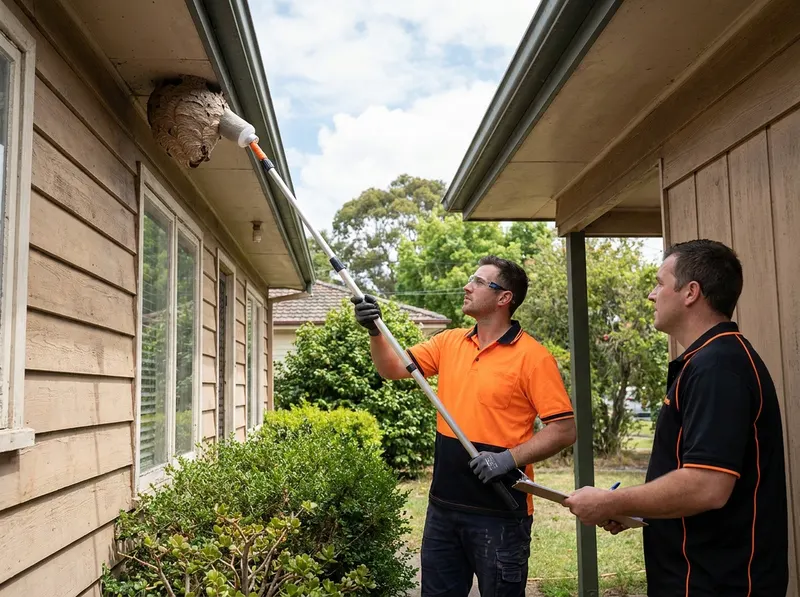
Paper wasps, hornets, and yellow jackets erect defensive nests beneath eaves, second-story soffits, architectural trim, and subterranean landscape burrows. Operators utilize long-range pressurized injection gear to neutralize defensive colonies instantly without forcing aggressive swarms into open windows or attic vents. Nest removal follows wildlife safety standards outlined by the Tennessee Wildlife Resources Agency , ensuring complete nest material extraction and mechanical deterrent placement on exposed timber. Field specialists inject fast-acting aerosol pyrethrum formulations directly into primary nest apertures from ground level or access ladders, neutralizing adult workers and queen specimens on contact. Nests are physically scraped, bagged, and removed from the property envelope to eliminate secondary dermestid beetle infestations that feed on abandoned pupal cells. Exposed timber and architectural trim receive an application of microencapsulated repellent to prevent emerging fertilizing queens from re-establishing aerial nests on the same building facets during subsequent seasonal cycles.
Get a quote →Hospitality and food prep facilities require continuous perimeter protection against flies, pantry pests, and foraging urban rodents. Our technicians install insect light traps, apply non-volatile structural bait gels, and complete systematic drain remediation to purge breeding biolayers. Treatments fulfill the sanitary inspection standards established by the Food and Drug Administration , maintaining pest-free conditions without cross-contaminating preparation surfaces. Technicians inject biological bioremediation foaming agents containing natural microbial spores deep into commercial floor drains to digest accumulated fats, oils, and grease that harbor fruit fly and phorid fly larvae. Non-chemical insect light traps with high-frequency shatterproof UV bulbs are mounted along interior service corridors away from open food preparation tables to intercept flying vectors. High-density bait matrices deployed in tamper-evident interior stations target cryptic perimeter invaders, while comprehensive entry-point sealing around utility penetrations protects commercial dry storage spaces.
Get a quote →You get a firm, itemized quote for your pest control service before any work begins, no surprises, no pressure.
Careful prep, tidy work, and a full cleanup when we are done. We treat your home and belongings like our own.
The same trusted, background-checked team from the first call to the final check.
Selecting the proper intervention requires diagnosing structural vectors and the biology of the target pest across Davidson County properties. If structural framing displays subterranean shelter tubes or mud tunnels along crawlspace piers, choose targeted liquid soil treatment paired with localized injection. If nighttime sightings confirm brown recluse activity within finished living quarters, choose comprehensive void dusting combined with exterior perimeter sealing.
The trade-off is mechanical exclusion speed versus the multi-week timeline required for systemic insect growth regulators to deplete hidden breeding populations. For attic or soffit noises, choose physical wildlife exclusion barriers rather than broadcast rodenticides to prevent dead-animal decomposition within interior wall cavities. When subfloor timber displays moisture content readings above 20%, choose crawlspace encapsulation and vapor barrier installation over repeated chemical fogging.
Chemical sprays temporarily kill adult wood-boring pests but fail to resolve the saturated biological habitat that invites recurring termite colonies and fungal decay. Homeowners managing chronic seasonal invaders along brick weep screeds benefit most from exterior non-repellent perimeter bands, which eliminate pests outside before chemical applications become necessary within interior living areas. Property owners prioritizing immediate child and pet safety should opt for mechanical exterior exclusions and tamper-resistant bait stations rather than indoor broadcast aerosol applications.
Every project gets a firm, written price after a free on-site visit. Ranges below for orientation.
Tell us about your pest control service job and we'll send a clear, written quote, usually the same day. Or just call and talk to a real Nashville pro.
(629) 319-7851
Properties bordering Shelby Bottoms Greenway, Radnor Lake State Park, and Centennial Park experience intense seasonal pest pressures due to dense river basins, natural karst topography, and mature hardwood forests. The prevalence of 19th-century limestone foundations in Germantown and unencapsulated post-war crawlspaces in East Nashville and Sylvan Park requires specialized barrier applications to combat heavy subterranean termite swarms and brown recluse migrations. Davidson County clay soils shrink and swell across seasonal drought cycles, creating foundation fissures along local thoroughfares like Gallatin Pike, Charlotte Avenue, and Hillsboro Pike that provide open ingress for seasonal rodent populations. In historic neighborhoods like Belmont-Hillsboro and 12 South, older stone masonry and settling mortar joints allow roof rats and field mice easy entry into warm attic envelopes during early winter temperature drops from November through January. Residential parcels in Donelson and Inglewood near the Cumberland River face continuous groundwater saturation, raising crawlspace relative humidity and triggering carpenter ant infestations along with wood-decaying fungus. During late summer drought cycles, foraging odorous house ants migrate out of desiccated soils into modern slab homes in The Nations, requiring non-repellent chemical barriers rather than perimeter repellant sprays that shatter colonies into multi-queen satellite pockets.
Free estimates for Nashville & the surrounding area.
 Pest Control Service