Subterranean termite pressure in Middle Tennessee stems primarily from high annual precipitation and warm, humid river basin soils. According to the University of Tennessee Extension , native subterranean termites…
Subterranean termite pressure in Middle Tennessee stems primarily from high annual precipitation and warm, humid river basin soils. According to the University of Tennessee Extension, native subterranean termites remain the most destructive structural wood-destroying insect in the state, causing thousands of dollars in hidden frame damage before winged swarmers emerge. Older crawl space foundations in East Nashville, Inglewood, and Germantown frequently feature damp earth-to-wood contacts, where colonies tunnel up porous brick piers through mud shelter tubes. In newer slab-on-grade developments throughout The Nations and Donelson, termites exploit expansion joints, utility penetrations, and bath traps concealed beneath subflooring. Addressing these entry points requires precision applications rather than superficial aerosol spraying.
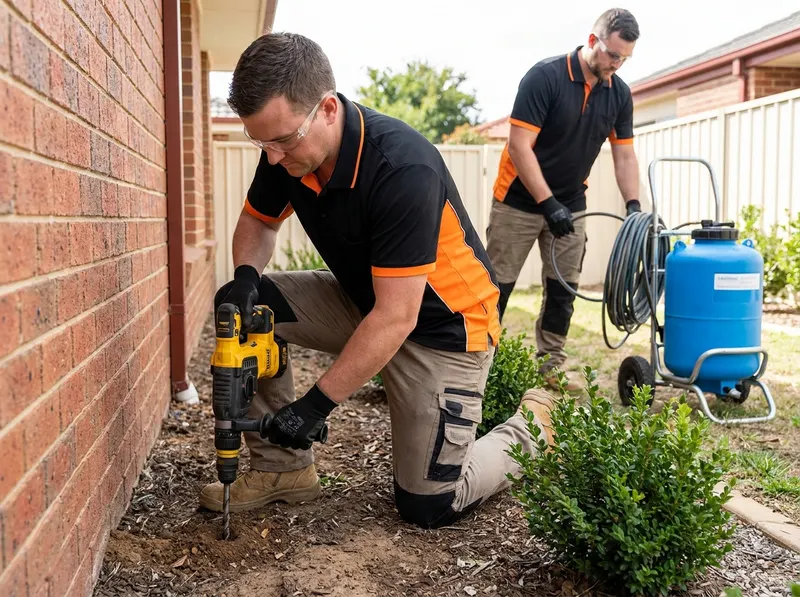
Effective defense requires an uninterrupted chemical or monitoring barrier encircling the entire foundation footprint. Following rigorous guidelines from the United States Environmental Protection Agency, modern subterranean interventions rely on non-repellent liquid termiticides, such as fipronil, which termites cannot detect. Foraging worker termites transfer the active compound back to the central nesting gallery, neutralizing the queen and collapsing the reproductive cycle within 90 days. Foundation perimeters are excavated into continuous 6-inch by 6-inch trenches, treated at strict label dilution rates of 4 finished gallons per 10 linear feet, and backfilled. Where exterior concrete porches or carports abut living areas in Sylvan Park or Belmont-Hillsboro, technicians drill 0.5-inch holes spaced every 12 inches through the concrete to rod the substrate directly.
Property owners balancing intervention types must consider structural layout and soil disturbance. Continuous liquid soil treatments provide immediate perimeter saturation, creating a durable defense zone that lasts up to a decade, whereas subterranean bait stations monitored according to standards established by the National Pest Management Association offer zero soil disruption around high-value landscaping in Green Hills and 12 South. For homes with accessible dirt crawl spaces, combining interior pier trenching with exterior band applications delivers absolute envelope security. All chemicals used are non-volatile once bound to the soil substrate, ensuring family living quarters, children, and indoor pets remain entirely separated from the treated sub-grade zones. Technicians confirm foundation perimeter measurements, identify moisture leaks documented under standards from the Tennessee Department of Environment and Conservation, and issue clear technical documentation without high-pressure multi-year maintenance mandates.
Every job gets a firm, written price after a free on-site visit.
Tell us about your subterranean termite treatment job in Nashville and we'll send a clear, written quote, usually the same day.
 Pest Control Service